Salisbury Steak Nutrition: Calories, Protein and Carbs
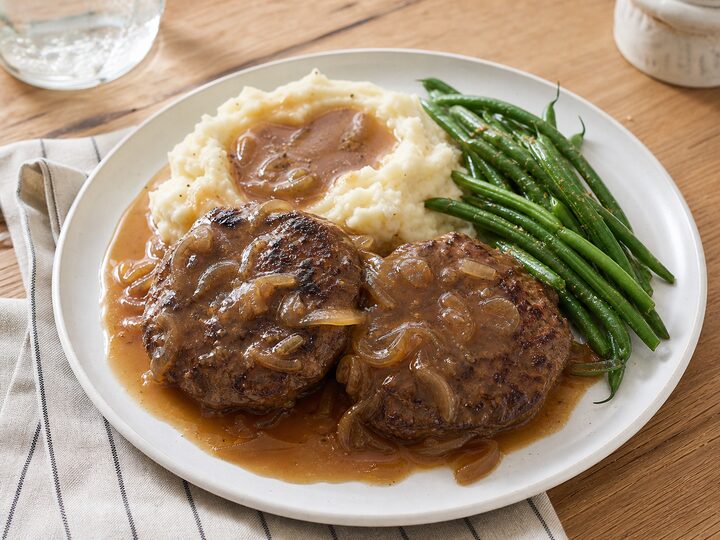
There is no single calorie count for Salisbury steak. The total depends on the patty’s weight and fat content, the binders mixed into the meat, the amount and style of gravy, and whether the stated serving includes side dishes. A useful published benchmark is 141 calories, 15 grams of protein, and 10 grams of carbohydrate for one steak from a standardized U.S. Department of Agriculture (USDA) school recipe—but that is an example, not a universal value.
For a homemade dinner, total the nutrition for the patty and gravy ingredients, divide by the number of servings, then add potatoes, noodles, vegetables, bread, or other accompaniments separately. That distinction matters: nutrition numbers for steak and gravy do not automatically describe everything on the plate.
For broader guidance on the dish, the main Salisbury steak guide connects recipes, gravy choices, cooking methods, storage, and troubleshooting.
A USDA Nutrition Benchmark
The USDA Recipe for Schools gives the following values for one finished steak from a standardized institutional formula, including its share of the gravy:
| Nutrient | Amount per finished steak with gravy |
|---|---|
| Calories | 141 |
| Protein | 15 g |
| Carbohydrate | 10 g |
| Fat | 4 g |
| Sodium | 323 mg |
| Iron | 1 mg |
The recipe portions about 4 ounces of raw meat mixture for each patty, then bakes the patties and adds gravy. It does not state a final cooked serving weight, so the raw 4-ounce portion should not be used as the weight of the finished nutrition serving. These values apply only to that recipe’s ingredients, yield, and finished portion; a larger homemade patty, fattier beef, richer gravy, or packaged entrée can differ substantially.
Portion size is the first detail to establish when estimating a meal. If you are deciding how many patties to prepare, the portion-planning method helps translate patty size into a practical serving count.
What Changes the Calorie Count
The patty usually supplies most of the protein and much of the fat. Its calories change with the amount of meat and the lean-to-fat ratio. The discussion of beef blends for Salisbury steak explains how leaner and richer ground beef behave in the finished dish.
Gravy adds a second variable. Its contribution depends on the amount served and whether it contains butter, oil, flour, milk, cream, soup mix, or concentrated broth. A lightly coated patty is not nutritionally equivalent to one served in a generous pool of gravy.
Breadcrumbs, crackers, egg, milk, sauces, and seasoning mixes affect the total as well. Even modest quantities matter when calculating a batch precisely. For the site’s classic Salisbury steak recipe, use the actual brands and quantities you cook with rather than assigning it the USDA example above.
Protein, Carbohydrates and Iron
Salisbury steak contains protein because its main ingredient is ground meat. The USDA school-recipe example provides 15 grams per steak, while a larger or more meat-heavy patty may provide more. Dividing a recipe into a different number of patties also changes the amount per serving.
The carbohydrates generally come from binders and gravy rather than the beef itself. Breadcrumbs, crackers, flour, cornstarch, onion soup mix, brown gravy mix, and sweetened sauces can all contribute. A patty without gravy may therefore contain fewer carbohydrates than the complete entrée, but it is not automatically carb-free.
Beef also supplies iron. The USDA example lists 1 milligram per steak. The exact amount varies with the meat, portion, and other ingredients, so use a recipe calculation or package label when a precise figure matters.
The Full Plate Counts Too
A Salisbury steak dinner often includes mashed potatoes, noodles, rice, bread, or vegetables. Those foods can change the meal’s calories, carbohydrates, fiber, fat, and sodium as much as the gravy does.
Keep the components separate when estimating a plate:
- Count the patty according to its cooked portion or the recipe yield.
- Count the gravy according to the amount actually served.
- Add each side dish and its butter, sauce, or dressing.
- Include seconds rather than assuming the original serving covers them.
The collection of sides for Salisbury steak includes both rich comfort-food pairings and lighter vegetable options. Separating the entrée from the sides also makes comparisons between recipes and packaged meals much more meaningful.
How to Compare Recipes and Labels
Start with serving size, not the calorie number. The U.S. Food and Drug Administration (FDA) explains that values on a Nutrition Facts label correspond to the stated serving. The percent Daily Value (%DV) shows how much a nutrient in one serving contributes to a daily diet; 5% DV or less is a general low benchmark and 20% DV or more is a general high benchmark.
For a useful comparison, put each option on the same basis:
- Confirm whether one serving means one patty, part of a tray, or a weight in grams.
- Check whether gravy is included.
- Compare calories, protein, carbohydrate, saturated fat, and sodium at equivalent serving sizes.
- Determine whether potatoes or other sides are part of the stated values.
- Multiply every value if you eat more than one labeled serving.
To estimate nutrition per 100 grams, divide the nutrient amount by the serving weight in grams and multiply by 100. Do not convert a per-patty value to a per-100-gram value unless the source also gives the patty’s weight.
Sodium and Practical Adjustments
Sodium can come from broth, Worcestershire sauce, gravy mix, onion soup mix, seasoned breadcrumbs, canned soup, and added salt. The USDA school-recipe example contains 323 milligrams per steak, but recipes built around concentrated packaged ingredients may differ considerably.
For more control, compare broth and seasoning labels, count sodium-bearing ingredients across both the meat and gravy, and taste before adding salt at the end. If the finished sauce is already over-seasoned, these methods for correcting salty Salisbury steak focus on dilution and balance rather than simply masking the salt.
Changing the meat can alter calories and fat, but the result depends on the actual products and recipe. A turkey Salisbury steak variation is an alternative preparation, not an automatic guarantee of lower calories or sodium.
Gluten, Dairy, Eggs and Other Allergens
Salisbury steak is not universally gluten-free, dairy-free, or egg-free. Traditional and packaged versions may contain wheat-based breadcrumbs or flour, egg binder, milk, butter, soy-containing sauces, or other allergenic ingredients. Gravy and seasoning packets require the same scrutiny as the patty.
The FDA identifies nine major food allergens and explains label reading and cross-contact considerations in its food-allergy information. Meat and poultry products fall under USDA regulation, so packaged Salisbury steak may use different label formatting from other grocery products. Read the complete package—including the gravy or sauce component—and contact the manufacturer when the label does not answer a medically important question.
For gluten, an ingredient list alone may not address cross-contact. The FDA’s gluten-free labeling standard explains what a voluntary gluten-free claim means on FDA-regulated foods. A homemade version can use the breadcrumb-free method, but every broth, sauce, seasoning, and thickener still needs to fit the dietary requirement. When egg is the concern, the egg-free binding options offer alternatives without implying that every other ingredient is allergen-safe.
Is Salisbury Steak Healthy?
Whether Salisbury steak fits a particular eating pattern depends on the recipe, portion, full plate, and individual nutritional needs. The USDA school-recipe example contains 15 grams of protein and 1 milligram of iron per steak, while some preparations can also be high in saturated fat or sodium. A yes-or-no label hides those differences.
A practical assessment considers the lean-to-fat ratio of the meat, the quantity and ingredients of the gravy, the patty size, and the balance of the meal. Choosing a moderate portion, measuring the gravy, and adding vegetables can produce a different nutritional profile from an oversized patty served with several rich sides.
Calculating a Homemade Batch
For the closest estimate, use package labels or a dependable nutrient database to record the nutrition information for every ingredient, total each nutrient for the whole batch, and divide by the number of equal servings. Include cooking fats, binder, gravy ingredients, and any liquid mix whose nutrition is not negligible. For example, if the complete batch contains 1,800 calories and makes six equal servings of patties and gravy, estimate 300 calories per serving before adding sides.
Weighing the finished patties can improve the estimate when their sizes vary. If one patty is noticeably larger, assigning every patty the same numbers will understate one serving and overstate another. Calculate side dishes separately so the entrée can be reused in different meal combinations.
The same caution applies to Salisbury steak meatballs: their nutrition depends on the exact beef, broth, cooking fat retained, number of meatballs, and serving size. Use the same batch-and-serving calculation rather than assigning a fixed calorie figure to every version.