Salisbury Steak Meatballs
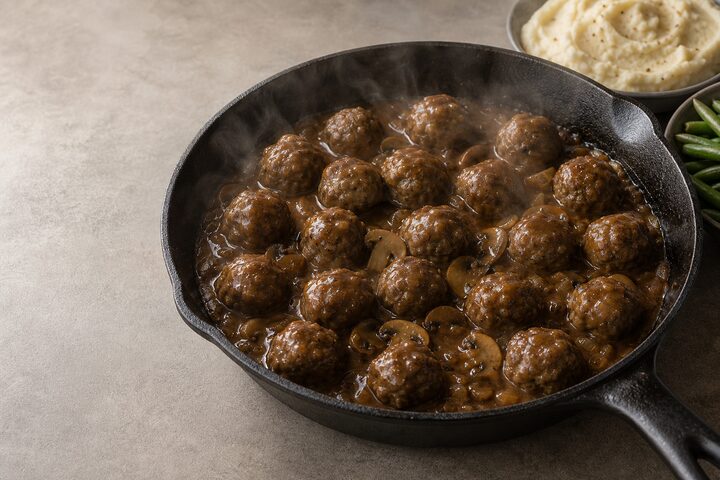
Salisbury steak meatballs bring the savory beef, browned onions, mushrooms, and glossy gravy of classic Salisbury steak into a round, fork-friendly form. The meatballs brown in a skillet, then finish gently in the gravy so the browned bits become part of the sauce. This stovetop recipe makes 20 meatballs—enough for four servings—and takes about 50 to 60 minutes.
Yield and timing
- Yield: 20 meatballs, about 1½ inches each
- Servings: 4 servings of 5 meatballs
- Prep time: About 20 minutes
- Browning time: About 12–16 minutes
- Gravy time: About 8–10 minutes
- Simmering time: About 8–12 minutes
- Total time: About 50–60 minutes
- Equipment: Large 12-inch skillet, instant-read thermometer, mixing bowl, whisk
Ingredients
For the meatballs
- 1½ pounds 85/15 ground beef
- ⅓ cup plain breadcrumbs
- 1 large egg
- ¼ cup finely minced onion
- 1 teaspoon Worcestershire sauce
- 1 teaspoon kosher salt
- ½ teaspoon black pepper
- A thin film of oil, for the skillet
For the onion-mushroom gravy
- 1 small onion, thinly sliced
- 8 ounces mushrooms, sliced
- 2 tablespoons rendered beef fat, butter, or a combination
- 2 tablespoons all-purpose flour
- 2 cups unsalted or low-sodium beef broth
- Black pepper, to taste
Mix and shape the meatballs
- Put the ground beef, breadcrumbs, egg, minced onion, Worcestershire sauce, salt, and pepper in a large bowl.
- Mix gently with your hands just until the ingredients hold together. Stop once the mixture is cohesive; prolonged mixing makes ground-beef mixtures firmer and less tender.
- Divide the mixture into 20 even portions and roll them into balls about 1½ inches wide.
Even sizing helps the meatballs finish at approximately the same time. If the mixture feels fragile, avoid adding more pressure while rolling it; chilling the shaped meatballs briefly can make them easier to handle. The same binding principles used to keep Salisbury steak from falling apart apply here.
Brown the meatballs
- Coat a large 12-inch skillet with a thin film of oil and place it over medium-high heat.
- Add half of the meatballs, leaving open space between them. Brown for about 6–8 minutes, turning carefully to color several sides.
- Transfer the browned meatballs to a plate. Repeat with the remaining batch.
The meatballs do not need to be cooked through during browning; they finish in the gravy. Working in two batches keeps the skillet hot enough to develop color and leaves browned bits, called fond, behind for the sauce.
Make the onion-mushroom gravy
- Reduce the heat to medium. Leave about 2 tablespoons of rendered fat in the skillet, pouring off any excess or adding butter if there is less than 2 tablespoons.
- Add the sliced onion and mushrooms. Cook for about 6–8 minutes, until the onion softens and the mushrooms develop browned edges, stirring and scraping up any loose browned bits.
- Sprinkle in the flour and cook for about 1 minute, stirring continuously.
- Gradually whisk in the beef broth. Scrape the bottom of the skillet so the fond dissolves into the sauce.
- Season with black pepper, then taste and add salt only if needed; broth and Worcestershire sauce vary in sodium. Let the gravy come to a gentle simmer before returning the meatballs.
For a deeper look at the flour-to-fat method and possible flavor additions, use the brown gravy guide. More mushroom-forward options are covered in the mushroom gravy variation.
Finish the meatballs in the gravy
- Return the browned meatballs and any juices from the plate to the skillet.
- Partially cover the skillet and reduce the heat to maintain a gentle simmer.
- Cook for about 8–12 minutes, turning the meatballs once so they coat evenly in gravy.
- Check one of the largest meatballs with an instant-read thermometer. The center must reach 160°F for ground beef.
- Remove the skillet from the heat once the meatballs are safely cooked. Let them settle briefly in the gravy before serving.
Cooking time is only an estimate; meatball size, skillet temperature, and burner strength all affect it. FoodSafety.gov lists 160°F as the safe minimum internal temperature for ground beef. Insert the thermometer into the center of a meatball, and check more than one if their sizes differ. The USDA ground-beef guidance explains why color alone is not a reliable doneness test. More thermometer guidance is available in the Salisbury steak temperature guide.
Adjust the gravy
The gravy thickens as the flour cooks and may continue to tighten after the skillet leaves the heat. If it becomes too thick, whisk in a small amount of broth until it coats a spoon without feeling pasty. The full troubleshooting method for loosening thick gravy covers fixes at different stages.
If the gravy is too thin when the meatballs are done, remove the meatballs temporarily and simmer the sauce a little longer. Avoid a hard boil, which can make the meatballs rough. For other options, use the steps for thickening thin gravy.
For an onion-only version, omit the mushrooms and allow the sliced onion to soften and brown before adding the flour. Taste before adding any extra salt, especially if the broth or Worcestershire sauce is not low-sodium.
Make-ahead and leftovers
For an easy make-ahead meal, cook the complete dish, refrigerate it promptly in a shallow covered container, and reheat it gently with the gravy. Add a splash of broth if the chilled sauce has become too thick. Heat leftovers to 165°F before serving.
The USDA leftovers guidance recommends prompt refrigeration and using refrigerated leftovers within 3–4 days. For meal planning and serving the second round well, the leftover Salisbury steak ideas offer practical options. For longer storage, follow the detailed freezing and thawing guidance.
Shortcuts and variations
Fully cooked frozen meatballs: Make the onion-mushroom gravy first, add the frozen meatballs, and follow the heating directions on their package. Heat them to 165°F before serving. Because brands and meatball sizes vary, the package directions are more dependable than a single universal simmering time.
Ground turkey: Ground poultry can replace the beef, but its finished texture and cooking needs differ. Cook poultry meatballs to 165°F, as specified by FoodSafety.gov. The turkey Salisbury steak method provides more detail on working with leaner meat.
Onion soup mix: Packaged soup mix can add onion flavor, but its salt level varies considerably. The onion soup mix variation explains how to balance that shortcut without making the finished gravy excessively salty.
Slow cooker or pressure cooker: The stovetop timing above does not transfer directly to those appliances. For a complete low-and-slow approach with established proportions, use the crock-pot Salisbury steak method rather than guessing at meatball cooking times or liquid ratios.
What to serve with Salisbury steak meatballs
Mashed potatoes are the natural choice because they catch the onion-mushroom gravy, but buttered noodles, rice, or soft polenta work just as well. Add a green vegetable or crisp salad to balance the rich sauce. The Salisbury steak sides guide includes more pairings for vegetables, starches, and lighter meals.
Nutrition will vary with the beef, broth, serving size, and accompaniments, so no fixed calculation is given for this recipe. The Salisbury steak nutrition overview explains the main factors affecting calories, protein, carbohydrates, and sodium.