Turkey Meatloaf Internal Temperature
Turkey meatloaf should be cooked to an internal temperature of 165°F in the center of the loaf. That is the number that matters for ground turkey, even if beef meatloaf guidance sometimes points to lower temperatures or more flexible doneness ranges.
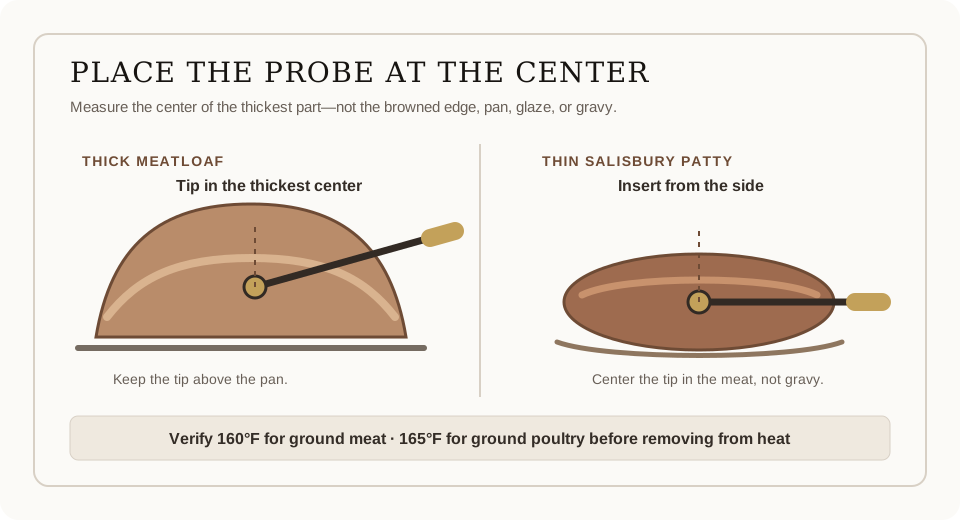
Use an instant-read thermometer and check the thickest part of the loaf, away from the pan and away from any pockets of sauce or cheese. If you are cooking beef, pork, or a mixed-meat loaf instead, use the broader meatloaf temperature guide so the doneness target matches the meat in the pan.
The Safe Temperature
The practical rule is simple: turkey meatloaf is done when the center reaches 165°F. Do not pull it at the temperature you might use for a beef meatloaf, and do not judge it by color alone. Ground turkey can look pale, firm, or fully cooked before the middle has reached the right temperature.
Start checking near the end of the expected baking time, then give the loaf more time if the center is still below 165°F. A loaf baked in a loaf pan often cooks more slowly through the middle than a free-form loaf on a sheet pan, because the pan shields the sides and holds moisture around the meat.
Where To Put The Thermometer
Insert the thermometer horizontally or at a slight angle into the thickest part of the loaf, aiming for the center. The probe tip should sit in the meat, not against the pan, not in a crack, and not inside a wetter pocket of glaze, vegetables, or melted cheese.
If the loaf is uneven, check more than one spot. The lowest center reading is the one to trust. When every thick section reads 165°F, the turkey meatloaf is ready to rest.
K-State Research and Extension explains that food temperature can remain constant or continue to rise during a rest, but its chart lists no safety rest time for ground poultry. Carryover cooking does not replace the endpoint check. FoodSafety.gov lists 165°F for ground poultry; every thick section must already read 165°F before the loaf leaves the oven. Do not pull turkey meatloaf below 165°F expecting the rest to make it safe.
Keep It Moist Without Undercooking
Do not pull turkey meatloaf early just to protect it from drying out. Shape the loaf to an even thickness so the center does not lag far behind the edges, then use the thermometer as the stop point instead of guessing from the surface.
A glaze can help the surface stay appealing, but it does not tell you whether the center is done. Browning, bubbling juices, and a firm top are useful signs that the loaf is close; the thermometer still makes the final call.
Rest Before Slicing
After the turkey meatloaf reaches 165°F, let it rest before slicing. Resting gives the juices time to settle and makes the loaf easier to cut cleanly. If you slice immediately, the loaf is more likely to crumble and lose moisture on the board.
Resting is for cleaner slicing and moisture retention, not for finishing an under-temperature loaf. The center must already read 165°F before it leaves the oven.
When Temperature Readings Disagree
If one spot reads 165°F and another is lower, keep cooking. Recheck from a second angle: the probe tip may have landed near the pan, in a crack, or inside a pocket of glaze, vegetables, or cheese. Trust the lowest center reading, and do not remove the loaf until every thick section reads at least 165°F.