Classic Meatloaf Recipe
This classic meatloaf is the familiar version: ground meat, eggs, breadcrumbs, milk, onion, seasoning, and a simple tomato glaze baked into a sliceable loaf. It is the right place to start before moving into faster, smaller, richer, or more heavily seasoned versions.
The mixture is moist without being loose, the glaze is sweet and sharp without taking over, and the method leaves room for the adjustments that matter most: pan shape, meat blend, binder, and doneness.
Yield And Time
Yield: 1 loaf, about 6 to 8 servings.
Prep time: about 20 minutes.
Cook time: about 60 to 75 minutes, depending on the pan and loaf shape.
Rest time: 10 to 15 minutes before slicing.
A free-form loaf on a rimmed sheet pan may cook a little faster than a tightly packed loaf pan version. The time is a guide; the center temperature and resting period matter more than the clock.
Ingredients
For the loaf:
- 2 pounds ground beef or a beef-and-pork blend
- 2 large eggs
- 1 cup plain breadcrumbs or quick oats
- 3/4 cup milk or broth
- 1 small onion, finely grated or cooked until soft
- 2 teaspoons Worcestershire sauce
- 1 1/2 teaspoons kosher salt
- 1/2 teaspoon black pepper
- 1 teaspoon garlic powder or 2 minced garlic cloves
For the glaze:
- 1/2 cup ketchup
- 1 tablespoon brown sugar
- 1 tablespoon mustard
- 1 teaspoon Worcestershire sauce or vinegar
This recipe and its timing are written for ground beef or a beef-and-pork blend. For poultry, use the turkey meatloaf recipe so the moisture balance and 165°F poultry target are handled deliberately.
Method
- Heat the oven to 350°F. Line a rimmed sheet pan with parchment, or lightly coat a loaf pan.
- In a large bowl, whisk the eggs with the milk or broth, breadcrumbs, onion, Worcestershire sauce, salt, pepper, and garlic. Let the mixture stand for 3 to 5 minutes so the crumbs absorb the liquid evenly.
- Add the ground beef or beef-and-pork blend. Mix gently with your hands or a fork only until the breadcrumb-and-egg mixture is evenly distributed. Heavy mixing can make the loaf dense; the goal is an even mixture, not a smooth paste.
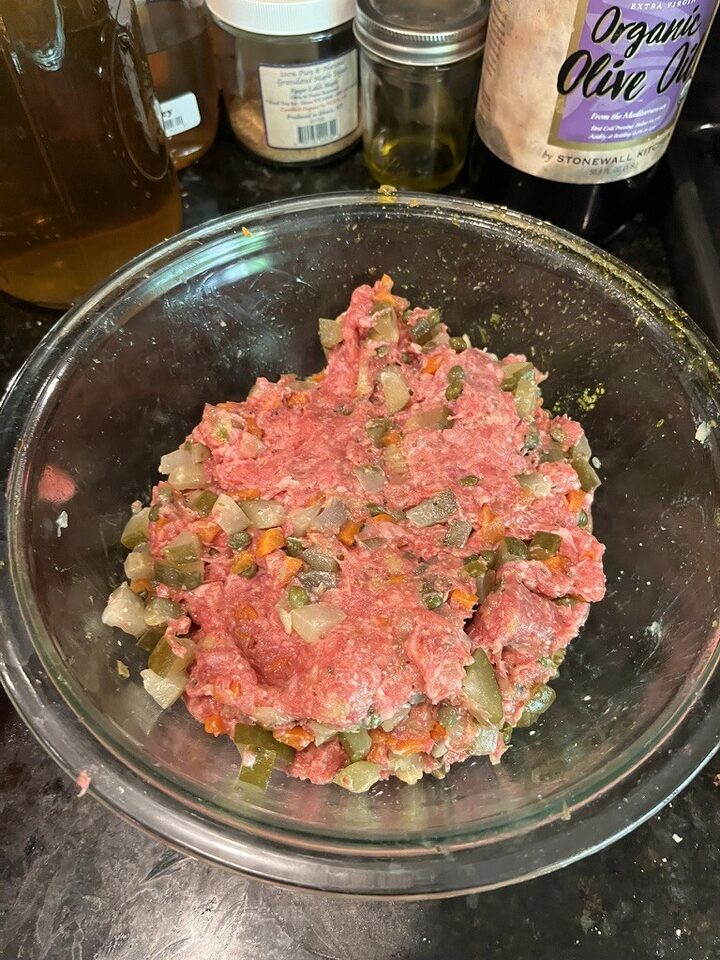
- Shape the mixture into an even loaf about 9 inches long and 5 inches wide on the sheet pan, or settle it into the loaf pan without packing it hard.
- Stir together the ketchup, brown sugar, mustard, and Worcestershire sauce or vinegar. Bake the unglazed loaf for 35 minutes, then spread the glaze evenly over the top.
- Continue baking until an instant-read thermometer inserted into the thickest center of the loaf, without touching the pan, reads 160°F. A two-pound loaf usually takes about 60 to 75 minutes total at 350°F, but its shape and pan determine the actual time. Rest it for 10 to 15 minutes before slicing.
Choose The Pan
For more browned surface, shape the loaf free-form on a rimmed sheet pan. Drippings can run away from the sides, and the wider shape may reach 160°F sooner, so begin checking before the top of the time range.
For a neat rectangular loaf, use a loaf pan and settle the mixture in without packing it hard. The pan holds more drippings against the meat and usually puts the bake near the longer end of the range. In either pan, the thermometer reading—not the shape or elapsed time—decides when the loaf is done.
Doneness And Resting
For this ground-beef or beef-and-pork loaf, cook the center to 160°F. Ground turkey or chicken requires 165°F. These targets come from FoodSafety.gov's safe minimum internal temperature chart.
Insert an instant-read thermometer into the thickest part of the center, from the side or top, and keep the tip in the meat rather than against the pan. Check more than one spot if the loaf is uneven. Illinois Extension's 4-H Cooking 201 meat loaf formula also recommends thermometer-based doneness instead of relying on appearance.
Rest the loaf for 10 to 15 minutes before slicing. That pause lets the juices settle and helps the slices hold together.
Why It Works
The eggs help the loaf set. Breadcrumbs or oats absorb moisture and keep the slices from turning crumbly. Milk or broth softens the binder so the loaf stays tender. Onion and Worcestershire sauce keep the flavor from tasting flat.
The glaze adds sweetness, acidity, and a glossy top. If you like a sharper finish, make it with more mustard or vinegar. If you want the familiar diner-style flavor, keep the ketchup and brown sugar.
Practical Adjustments
For a softer loaf, use a beef-and-pork blend or add milk or broth 1 tablespoon at a time, up to 2 tablespoons, if the mixed binder feels stiff. For a firmer loaf, reduce the starting liquid by 1 tablespoon and let the breadcrumb mixture stand for 3 to 5 minutes before adding the meat.
For cleaner slices, shape the loaf evenly, avoid packing it tight, and give it the full 10-to-15-minute rest.
If you are cooking for a smaller table, the one-pound version is easier to finish. For a larger dinner or planned leftovers, use the two-pound version. For a holiday-size loaf or bigger group, use the three-pound version so the shape and timing are adjusted on purpose.
If the loaf is being made mainly for later meals, freeze cooked slices or a shaped uncooked loaf on purpose instead of treating the freezer as an afterthought; the freezing meatloaf guide covers that choice.
Where To Go Next
Once the classic loaf is familiar, the variations are straightforward. Use the easy meatloaf recipe when you want fewer steps, the mini meatloaf method when you want faster portions, or the meatloaf with cheese when you want a richer center.
For a boxed shortcut, meatloaf with stuffing changes the binder and seasoning in one move. For more recipe context, the broader meatloaf recipes section keeps the main versions together.